

Ethical Coffee Sourcing for My Business: A Guide for Manchester’s Industrious Owners
If your "ethical" coffee label doesn't directly improve a farmer's life, it's just expensive wallpaper for your cafe. Manchester's hospitality scene is built on grit and honesty, so you know that finding a genuine coffee supplier for restaurants Manchester involves more than just picking the prettiest bag. You want to serve a brew that tastes as good as it feels. However, with the June 2026 EUDR traceability deadline looming and the confusion over varying certifications, it's easy to feel like you're paying a premium for nothing but a marketing gimmick.
We understand the pressure of balancing a tight bottom line with the desire to do right by the world. You're busy running a business and don't have time for greenwashing or paying for labels that don't actually help the people growing the beans. This guide cuts through the noise to show you how to build a sustainable, community-focused brand that stands out on any busy Northern street. We will break down the real difference between Fairtrade and direct trade, explain how to spot authentic sourcing, and help you find a local partner who shares your industrious spirit.
Key Takeaways
- Learn to decode complex certifications like Fairtrade and Direct Trade so you can invest in sourcing that truly impacts farming communities.
- Discover five critical questions to ask a potential coffee supplier for restaurants Manchester to ensure their beans are fully traceable and fairly priced.
- Find out how to turn your ethical supply chain into a compelling story for your menu that builds genuine loyalty with your customers.
- Stay prepared for upcoming 2026 traceability regulations by understanding how to spot and avoid greenwashing in the wholesale market.
- See how a commitment to social responsibility and industrious values can transform a simple cup of coffee into a powerful tool for community good.
Why Ethical Coffee Sourcing Matters for Your Manchester Business
Manchester was built on the back of the industrial revolution. We know the value of hard work and the importance of a "proper brew" to keep the city moving. When you choose a coffee supplier for restaurants Manchester, you aren't just buying a commodity. You're making a choice about whose hard work you support. Ethical sourcing has moved beyond a marketing trend for 2026. It is now a pillar of business resilience. By ensuring every hand in the supply chain is treated with respect, you protect the future of your own cafe or restaurant.
Our city’s symbol is the worker bee. It represents an industrious community where every individual plays a vital role in the health of the hive. We apply this same logic to our coffee. If the farming communities in Brazil or Ethiopia aren't thriving, the "hive" of the global coffee industry suffers. This leads to abandoned farms, lost biodiversity, and eventually, a total lack of quality beans for your customers. Ethical sourcing ensures that the grit and determination shown by farmers are rewarded with a fair living, keeping the supply chain strong for years to come.
The True Cost of Cheap Coffee
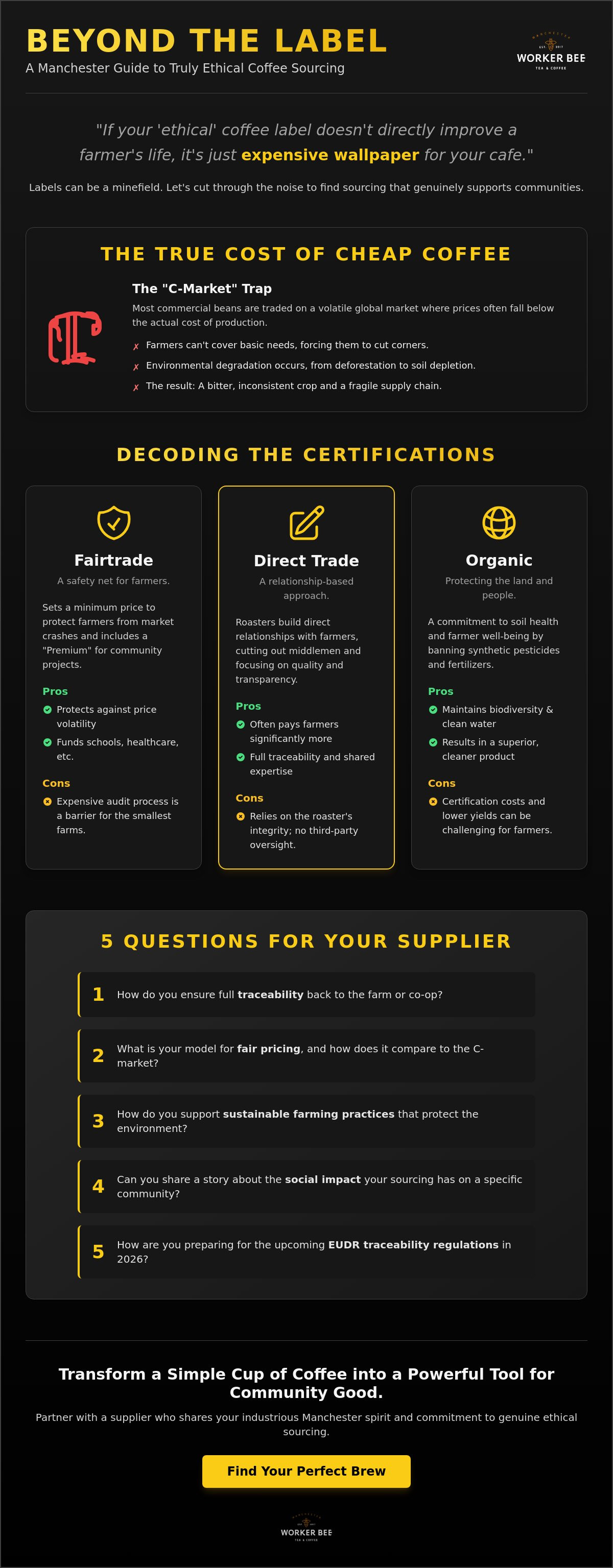
Cheap coffee usually comes at a hidden price. Most commercial beans are traded on the "C-market," a global commodity exchange where prices fluctuate based on speculation rather than the actual cost of production. When prices dip, small-scale farmers often can't cover their basic needs. To survive, they might cut corners on environmental protections or clear forest land to plant more crops. This degradation of the land directly impacts the flavour profile of the beans. A stressed environment produces a bitter, inconsistent crop. Investing in sustainable coffee classifications ensures that farmers have the resources to protect their soil and their families, resulting in a superior product for your menu.
Building Brand Loyalty Through Values
Modern customers in Greater Manchester are savvy. They don't want a faceless product; they want a story they can believe in. There is a clear shift happening from "commodity" coffee to "story-driven" beverages. When you can tell a customer exactly where their flat white came from, you build a level of trust that a generic chain can't match. This transparency also does wonders for your team. Baristas who understand the social impact of their work feel a deeper connection to their role. Giving your staff a mission beyond just "making drinks" reduces turnover and creates a more energetic, decisive atmosphere in your shop. People want to work for, and buy from, businesses that stand for something real.
Fair Trade vs. Direct Trade vs. Organic: Decoding the Labels
Labels are a minefield. You've seen the stickers: Fairtrade, Organic, Rainforest Alliance. They look good on a bag, but what do they actually do for the person growing the beans? A lack of a "Fairtrade" sticker doesn't always mean a coffee is unethical. In fact, some of the most industrious and fair relationships happen without a third-party badge. Understanding sustainability in the coffee supply chain means looking past the ink on the packaging. You need to know if your money is actually reaching the farm or just funding a marketing department.
Organic certification is about more than just avoiding chemicals. It's a commitment to protecting the soil and the health of the farmers. By banning synthetic pesticides, these farms keep local water supplies clean and maintain biodiversity. In the UK, the Sustainable Farming Incentive even offers support for organic conversion, showing how vital these practices are for the future. When you choose a coffee supplier for restaurants Manchester, look for those who value the land as much as the final cup.
The Pros and Cons of Fair Trade
Fairtrade acts as a vital safety net. It sets a minimum price floor that protects farmers when global market prices crash. On top of that, there's a "Fairtrade Premium." This is extra money paid into a communal fund for local projects like schools or healthcare. However, the audit process is expensive. For the smallest, most vulnerable farms, the cost of the certificate itself can be a barrier. This is why many excellent beans from honest growers don't carry the official mark. Don't dismiss a supplier just because they lack the sticker; ask about their alternative standards instead.
Direct Trade: The Power of Relationships
Direct trade is about cutting out the middleman. Instead of buying through massive, faceless exchanges, your supplier works directly with the farm or cooperative. This model often pays significantly more than the Fairtrade minimum because it rewards quality. If a farmer produces a world-class crop, they get a world-class price. Transparency reports are the gold standard here. If a supplier can't tell you the name of the farm or the price paid above the market rate, be wary of greenwashing. Genuine direct trade is built on grit, trust, and mutual respect.
Swiss Water Decaf: Ethics in Processing
Sustainability doesn't stop at the bean. It includes how we treat it once it leaves the farm. Many decaf processes use harsh chemicals like methylene chloride to strip the caffeine. We prefer a cleaner, more industrious approach. The Swiss Water process uses only water, temperature, and time. It’s better for the environment and preserves the bean’s natural character without leaving chemical residues. If you want to dive deeper into this, check out Swiss Water Decaf Coffee: The Ultimate Guide for Greater Manchester’s Coffee Lovers. Providing a truly ethical menu means knowing every step of the journey, from the soil to the steam wand. Whether you serve our Worker Bee Espresso or a decaf blend, focus on substance over style.
Evaluating a Local Coffee Supplier: 5 Questions for Manchester Owners
Choosing a coffee supplier for restaurants Manchester is a big decision. It's about more than just a delivery schedule. You're picking a partner who represents your values to every customer who walks through your door. To avoid the trap of greenwashing, you need to be direct. Don't be afraid to ask the tough questions. A supplier who shares our city's industrious spirit will welcome the chance to show their work.
Use these five questions during your next tasting or sales meeting to see if a supplier truly makes the grade:
- Can you trace this specific blend back to the farm or cooperative? Transparency starts with a name. If they can only give you a country of origin, they aren't looking deep enough into their own supply chain.
- How much above the C-market price was paid for these beans? As we discussed, the commodity market often fails farmers. A truly ethical partner will pay a premium that reflects the quality and the hard work involved.
- Do you have long-term standing relationships with your growers? Stability matters. Ethical sourcing isn't a one-off purchase; it's a multi-year commitment that allows a farming community to plan for the future.
- How do your sourcing practices support environmental sustainability? Ask about shade-grown methods or how they align with Rainforest Alliance certification standards to protect local biodiversity.
- What social projects are being funded by this coffee's premiums? Whether it’s building a school or improving local irrigation, the money you spend should serve a larger purpose.
The Roaster-Wholesaler Relationship
Local Manchester roasters often offer a level of transparency that national distributors simply can't match. They are your neighbors. You can visit their warehouse, see the sacks of green beans, and talk to the people who actually roast the coffee. This "open-book" sourcing is a goldmine for your marketing. It allows you to tell a genuine story on your menu. Look for a partner who values substance over style and understands the grit required to produce world-class goods.
Equipment and Sourcing Synergy
If you've invested in ethically sourced beans, you owe it to the farmer to extract every bit of flavour correctly. Using subpar kit is a disservice to the whole supply chain. Professional-grade machinery ensures that the hard work done at the farm level isn't lost in a sour or burnt shot. For advice on the right tools for the job, see our guide on Manchester’s Best Commercial Coffee Machines: A Local Buying Guide for 2026. Proper grinding and extraction are the final steps in a long, industrious journey. Respect that journey by serving a brew that does the beans justice.
The Business Case: How to Market Your Ethical Coffee Menu
You've done the hard work of finding a coffee supplier for restaurants Manchester that aligns with your values. Now, you need to tell that story. Ethical sourcing isn't just a feel-good choice; it's a powerful brand differentiator. In a city that values honesty and grit, being open about where your beans come from builds a level of trust that generic chains can't touch. It turns a simple caffeine fix into a vote for a better world.
The key is to avoid sounding preachy. Nobody wants a lecture with their morning latte. Instead, train your team to share small, impactful facts. If a customer asks about the roast, a barista could mention that the Worker Bee Espresso they're drinking supports specific community projects in the growing region. It’s about being an accessible expert. Use your branded merchandise, like Worker Bee Mugs or Worker Bee Reusable Cups, to reinforce this message. These items act as a visual handshake, showing you're part of a larger, industrious mission.
Visual Storytelling in Your Cafe
Don't let your ethical commitments stay hidden in a spreadsheet. Bring them to life on your walls. Use origin maps and photos of the farming cooperatives to create a physical connection between Manchester and the source. When customers see the faces behind the beans, the value of the "proper brew" becomes clear. This transparency is what sets the best local spots apart. For more inspiration on how the city's top venues handle their branding, take a look at The Ultimate Guide to Coffee Shops in Manchester: Finding Your Proper Brew in 2026.
Digital Transparency
Your social media is the perfect place to show the grit behind the glamour. Share updates from your supplier about the latest harvest or the impact of the social premiums you've helped fund. This isn't just "content"; it's proof of your integrity. Write a simple, punchy "Our Ethics" statement for your website or delivery app profiles. Keep it direct and unpretentious. If you're ready to upgrade your menu with beans that tell a real story, you can browse our ethical coffee range today. Highlighting your commitment to quality and social responsibility makes your business feel human, reliable, and deeply rooted in the community.
The Worker Bee Commitment: Global Ethics Meets Manchester Grit
Choosing a coffee supplier for restaurants Manchester shouldn't feel like a transaction with a faceless corporation. It's a handshake between neighbors. In our city, we value substance over style. We respect the grit it takes to build a business from the ground up. That’s why our commitment to ethical sourcing isn't just about a certificate on a wall. It’s about ensuring that the quality of your brew doesn't come at the expense of the farmer or the environment. We believe in "Proper Brews" that support industrious communities both here and abroad.
When you partner with us, you're joining a collective identity. We don't just drop off bags of beans and drive away. We act as a community collaborator, helping you navigate the complexities of modern sourcing with honesty and clarity. Our mission is to provide world-class goods that are inclusive for everyone, stripping away the elitism often found in the specialty industry. Every bag of Worker Bee Espresso delivered to a Manchester kitchen carries a promise of social responsibility and regional pride.
Global Ethics, Local Impact
Our sourcing strategy is our moral compass. We focus on building long-term relationships with growers who share our industrious spirit. This means paying premiums that fund vital social projects in farming regions, from education to clean water. But we don't stop at the border. As a Manchester-born business, we ensure our impact is felt at home too. We collaborate with local initiatives and focus on collective growth within Greater Manchester. We choose partners who aren't afraid of hard work and who value transparency as much as we do. This shared honesty is what makes the "Worker Bee" symbol a true badge of authenticity.
A Complete Ethical Menu
A truly sustainable beverage program needs to be inclusive. It shouldn't matter if your customer is ordering a double espresso or a caffeine-free alternative. The ethics must remain consistent. This is why we treat our Worker Bee Swiss Water Decaf with the same respect as our lead blends. It offers a chemical-free, high-quality option that doesn't compromise on flavour or values. Your menu should reflect the diversity of your customers' needs without sacrificing your commitment to the planet.
This philosophy extends to our entire range. Whether you are serving our Worker Bee Hot Chocolate or our selection of teas, you can be sure the sourcing is sound. For those looking to perfect their non-coffee offerings, take a look at Tea in Manchester: A Guide to the Perfect Proper Brew for the Industrious. If you're ready to build a menu that stands for something real, getting started with a wholesale partnership is simple. We provide the beans, the Commercial Espresso Machines, and the support you need to keep your hive thriving. Let’s make Manchester’s hospitality scene the most ethical and industrious in the country, one proper brew at a time.
Build a Legacy with Every Proper Brew
Ethical sourcing is more than a badge; it's a commitment to the grit and honesty that makes our city great. You've learned how to cut through the greenwashing by asking direct questions and understanding the true value of direct trade. By choosing a coffee supplier for restaurants Manchester that values transparency, you're protecting global biodiversity and supporting the industrious spirit of farming communities. It's about making sure the "hive" thrives at every level, from the soil to the steam wand.
Ready to switch to a supplier who cares? Discover Worker Bee Espresso for your business.
Let's keep the hive thriving together.
Frequently Asked Questions
Is ethically sourced coffee always more expensive for my business?
Not necessarily when you look at the big picture. While the price per kilogram might be higher than commodity grade beans, ethical sourcing builds a more resilient brand. You attract loyal customers who value honesty and are willing to pay for quality. Working with a coffee supplier for restaurants Manchester also gives you access to better training and support, which reduces waste and improves your overall margins.
What is the difference between Fair Trade and Direct Trade coffee?
Fairtrade is a certification that provides a guaranteed price floor to protect farmers from market crashes. Direct trade goes a step further by cutting out the middleman and building a one on one relationship between the roaster and the farm. This model usually pays much higher premiums because it rewards exceptional quality. Both methods support farmers, but direct trade often offers the most transparency for your menu.
How can I prove to my customers that my coffee is ethically sourced?
Honesty is your best marketing tool. Ask your supplier for specific farm names, cooperative details, or even photos of the harvest. You can feature these details on your menu or a chalkboard to show the grit behind the brew. Sharing the Worker Bee story shows you aren't just buying a product; you're supporting an industrious community. Manchester customers respect businesses that can show their work.
Does organic coffee really make a difference to the taste?
Healthy soil produces better fruit. Organic farming avoids synthetic pesticides that can stress the plants and degrade the local ecosystem. While the label itself doesn't guarantee a specific flavour profile, the careful husbandry required for organic certification often results in a cleaner, more vibrant cup. It is about respecting the land so it can produce its best work for your customers.
Can small businesses afford to switch to ethical coffee suppliers?
Switching is a strategic investment in your reputation. Many small Manchester businesses find that serving a proper brew with a real story allows them to compete with big chains on quality rather than price. People are often happy to pay a few pence more when they know it supports fair wages and sustainable farming. It is a way to prove your brand's grit and long term values.
What should I look for in a sustainable coffee roaster in Manchester?
Look for a partner who is physically present in the city and open about their practices. A reliable coffee supplier for restaurants Manchester should be able to show you their roasting process and provide clear data on their supply chain. They should feel like a neighbor who understands the local market and shares your commitment to social responsibility. Substance should always come before a flashy sales pitch.
Is decaf coffee less ethical because of the processing?
Processing methods vary significantly. Traditional decaffeination often uses chemical solvents like methylene chloride, which can be hard on the environment. However, the Swiss Water process uses only water and osmosis to remove caffeine. It is a clean, industrious method that keeps the bean's integrity intact. Choosing Swiss Water Decaf ensures your decaf drinkers get an ethical, chemical free experience that matches your values.
How does ethical sourcing affect the quality of the espresso?
Ethical sourcing directly impacts the quality of the Worker Bee Espresso in your hopper. When farmers are paid fairly, they can invest in better equipment and more meticulous sorting. This reduces the number of defective beans that cause sour or bitter notes. You get a more consistent, high quality product that makes your baristas' jobs easier and keeps your customers coming back for a proper brew.