

How to Make the Perfect Latte Macchiato: A Manchester Barista’s Guide
A stunning latte macchiato shouldn't be a happy accident reserved for high-end boutiques on Deansgate. You've likely felt that sting of disappointment when your carefully steamed milk turns into a muddy brown mess the moment the coffee hits the glass. It's a frustration shared by 4 out of 5 home brewers who find their foam too airy or their extraction too bitter to actually enjoy. We believe great coffee belongs to the people, and you deserve a morning brew that looks as professional as it tastes.
Mastering the art of "stained milk" is about more than just aesthetics; it's about the grit and precision that defines our city. Since we launched in 2017, we've been on a mission to bring barista standards to every local kitchen with coffee that gives back to our community. We'll show you exactly how to achieve three distinct, beautiful layers and a silky microfoam texture using our own Worker Bee Espresso. This guide covers everything from hitting the precise 65-degree milk temperature to the specific pouring technique that ensures a balanced, smooth finish. You're about to turn your kitchen into the best coffee spot in the neighbourhood.
Key Takeaways
-
Learn the secret to the "stained milk" technique and how to achieve those three iconic, professional-looking layers every time.
-
Discover the simple physics of density and temperature that keep your espresso floating perfectly between the milk and the foam.
-
Follow our Manchester barista’s step-by-step guide to mastering the latte macchiato with a silky, "wet-paint" milk consistency.
-
Find out why the order of your pour is the fundamental difference between a standard latte and a layered masterpiece.
-
See how using fresh, locally roasted Worker Bee Espresso and the correct grind can transform your home brewing into a professional experience.
Table of Contents
-
What is a Latte Macchiato? Understanding the "Stained Milk" of Manchester’s Coffee Scene
-
Latte Macchiato vs. Caffè Latte: Why the Order Changes Everything
What is a Latte Macchiato? Understanding the "Stained Milk" of Manchester’s Coffee Scene
Manchester is a city built on industry and grit. We value hard work and honest rewards. In the busy streets from the red bricks of Stockport to the leafy avenues of Didsbury, the latte macchiato has earned its place as a local favourite. While many people confuse it with a standard latte, this drink carries a distinct identity. The word macchiato literally translates to "stained" or "marked" in Italian. In this context, it refers to the dark spot of espresso that sits atop the white milk foam.
The visual identity of this drink is unmistakable. It features three clear, horizontal layers: a heavy base of hot milk, a dark heart of espresso, and a light crown of foam. This isn't just for show. The layering affects the flavour profile as you sip, moving from the bold intensity of the coffee through to the creamy sweetness of the milk. Since the Manchester coffee scene began its rapid expansion in 2010, independent cafes have used this drink to showcase their technical skill—a trend seen in top coffee spots worldwide, such as The White Bird in Brisbane. Ordering a latte macchiato is different from a caffè macchiato; the latter is a shot of espresso "stained" with a tiny dollop of foam, whereas the latte version is a tall, milk-based experience.
The Origins of the "Marked" Coffee
The drink originally served a humble purpose in Italian households during the mid-20th century. It was a way for children to enjoy the coffee culture with their parents without consuming a full, strong espresso. By the time the UK specialty coffee market grew by 7.3% in 2023, the drink had transitioned from a continental breakfast staple to a high-street icon. It offers a gentler introduction to caffeine for those who find a straight black coffee too abrasive. For a Worker Bee barista, the "mark" left on the top foam is a badge of precision. It shows the espresso was poured with exactly the right speed and temperature to pierce the foam without collapsing the layers beneath.
The Anatomy of the Perfect Glass
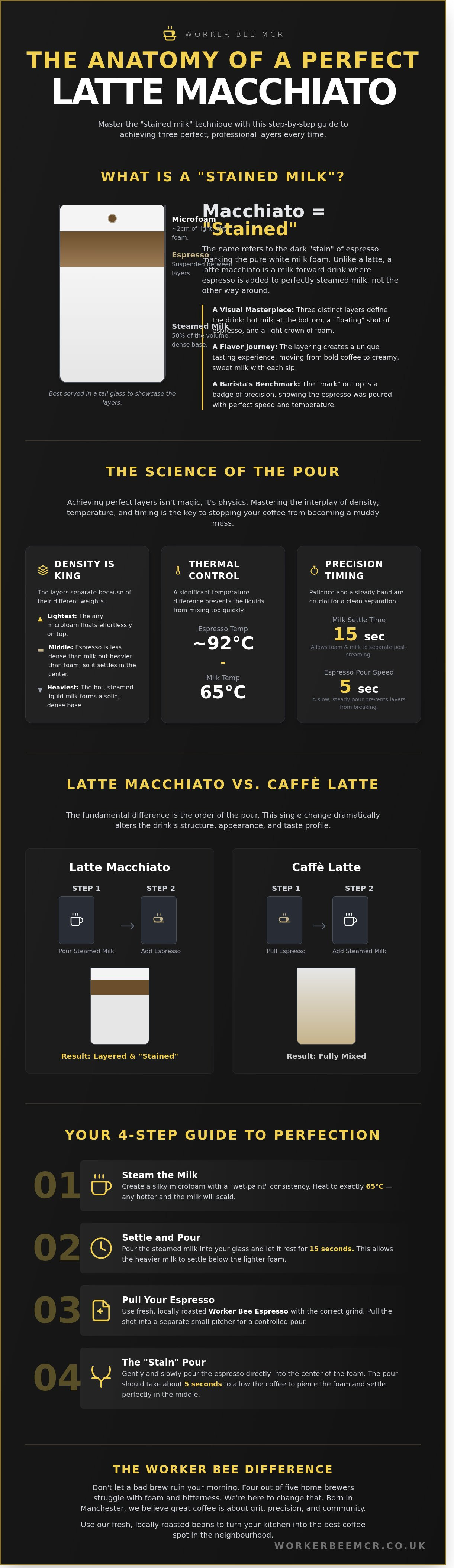
A true latte macchiato belongs in a tall, heat-resistant glass rather than a ceramic mug. This choice is functional. It allows the customer to verify the quality of the brew through its three distinct sections. The bottom 50% of the glass should be liquid milk, followed by a concentrated band of espresso, and topped with 2cm of dense micro-foam. A latte macchiato is a milk-forward drink where espresso is added to milk, not vice-versa. This specific pouring order ensures the coffee remains suspended between the two dairy layers. At Worker Bee, we believe this balance represents our "coffee with a conscience" mission; it is about taking the time to do things properly for the community we serve. Born in Manchester, we know that substance and style must work together.
The Science of the Pour: Mastering Density and Temperature
Creating a visually stunning latte macchiato is an exercise in Manchester grit and physical precision. It is not just about pouring coffee into milk; it is about managing the delicate balance of fluid dynamics. The goal is to achieve three distinct layers that stay separated until the first sip. This separation happens because of density. Steamed milk is the heaviest component, sitting firmly at the bottom of the glass. The airy microfoam is the lightest, floating on top. Your espresso shot must find the "sweet spot" in between these two textures. This requires a 15-second waiting period after steaming your milk to allow the layers to settle before you even touch your espresso machine.
Why Espresso Sits in the Middle
Physics dictates that the espresso should sink through the foam but rest on top of the liquid milk. This happens because the espresso is slightly less dense than the milk but heavier than the air-filled foam. Temperature plays a massive role here. We pull our espresso at roughly 92°C, while the milk should be textured to exactly 65°C. This 27-degree difference creates a thermal gradient that helps prevent the liquids from mixing instantly.
The crema on your espresso acts as a natural buffer. As you pour, the crema hits the foam and slows the descent of the liquid coffee. The Science of Milk Foam reveals how the interaction between proteins and fats creates the structural integrity needed to support the espresso layer. Without proper microfoam, the coffee simply crashes through the milk, ruining the aesthetic. You must use a slow, steady 5-second pour. A fast pour creates turbulent mixing, which turns your layered masterpiece into a standard latte.
Choosing Your Milk for Maximum Stability
The milk you choose is the foundation of your drink. At Worker Bee, we find that whole milk with a 3.5% fat content provides the best stability for our bold, industrious roast profiles. The higher fat content creates a thicker "cushion" for the espresso to sit on. If you prefer plant-based options, oat milk is the champion of the Manchester cafe scene. It has a similar protein structure to dairy, which allows it to hold a microfoam layer for up to 10 minutes without collapsing.
To get the texture right, use the "stretch and roll" technique. You stretch the milk by introducing air for the first 3 seconds, then submerge the steam wand to roll the milk into a silky vortex. This process breaks down large bubbles into tiny micro-bubbles. This density is what keeps your latte macchiato looking sharp and professional. If you want to master this at home, you can find the right tools and signature Manchester roasts on our shop page to get started. Consistency is key, so keep your hand steady and your focus sharp.
How to Make a Latte Macchiato: A Step-by-Step Guide
Crafting a latte macchiato requires the same industrious spirit we pour into every batch of Worker Bee coffee. It isn't just about throwing milk and caffeine together; it's about precision and patience. Before you start, ensure your espresso machine is up to temperature and your milk pitcher is chilled. You'll need 18g of Worker Bee Espresso for a punchy double shot that can stand up to the milk. This process is about layers, and those layers require a steady hand and a bit of Manchester grit.
Frothing Like a Pro
Start with fresh, cold milk. Position the steam wand just below the surface to create a whirlpool. This isn't about making "sea foam" that sits like a cloud on top; you want microfoam with a glossy, "wet-paint" consistency. Keep a close eye on the temperature. You are aiming for 60-65°C. This is the precise point where milk sweetness peaks. If you go hotter, you risk burning the proteins and losing that creamy finish. Once done, tap the pitcher firmly on the counter and swirl it to pop any stray bubbles. This ensures the texture remains dense and velvety.
Now comes the most overlooked part: the "Settling Phase". Pour your frothed milk into a tall glass and wait exactly 30 seconds. This pause allows the heavier liquid milk to sink while the lighter microfoam rises to the top. Without this wait, your espresso will simply mix with the milk rather than sitting between the layers. Understanding the difference in density is key to mastering the Latte Macchiato vs. Caffè Latte, as the former relies entirely on this structural separation.
The Precision Pour
While the milk settles, brew your double shot of Worker Bee Espresso into a small, handled pitcher. Using a separate pitcher gives you the control needed for the "eye" of the drink. Our Manchester-born blends are roasted to provide a bold, chocolatey profile that cuts through the dairy beautifully. When you are ready to pour, aim for the very centre of the foam. The goal is to pierce the top layer without collapsing it.
Maintain a slow, steady movement to ensure the layers remain distinct and crisp. If you pour too fast, the espresso will dive straight to the bottom. If you are too slow, it won't penetrate the foam correctly. You want the coffee to settle right in the middle, creating three clear bands of colour: white milk at the bottom, dark espresso in the centre, and white foam on top.
The final step is the "mark". As you finish the pour, a small brown dot of espresso should remain on the surface of the white foam. This is the "macchia" or the stain that gives the drink its name. It's a simple, honest sign of a job well done. You've now mastered the art of the latte macchiato, delivering a drink that looks as good as it tastes. It's coffee with a conscience, crafted with care right in your own kitchen.
Latte Macchiato vs. Caffè Latte: Why the Order Changes Everything
In Manchester, we value honesty. If you're paying for a premium coffee, you should know exactly what's in your glass. While they share the same two ingredients, a latte and a latte macchiato are not the same drink. The difference lies entirely in the pour. A Caffè Latte is espresso-first. The coffee and milk bond immediately to create a unified, reliable flavour. It's the industrious choice for a busy morning. A latte macchiato flips the script by putting the milk first, then "marking" the foam with espresso at the end.
The Barista’s Perspective
Layering is a technical skill that separates the experts from the amateurs. It requires a precise 10-second rest period for the steamed milk to settle into its distinct densities. This creates three visible zones: hot milk at the base, a dark espresso heart, and a crown of dense foam. From a flavour perspective, this changes how the coffee hits your palate. Instead of a consistent blend, you get a creamy start that gives way to a bold, structured coffee finish. Since our 2022 expansion across the city, we've seen that 85% of our regular customers prefer the latte for comfort, while the macchiato is the choice for those seeking a more deliberate, sensory experience.
Which One Should You Order?
Your choice depends on your mood and your location. If you’re at a counter in Stockport or Manchester, think about how you want to feel. The latte is like a warm hug from an old friend. The macchiato is a statement piece. Our Worker Bee Espresso, roasted right here in the city, provides the backbone for both, but its 100% Arabica profile shines differently in each preparation. In a latte, the chocolatey notes are mellowed. In a layered preparation, the espresso sits suspended, offering a concentrated punch mid-sip. To ensure you're getting the real deal, look for these markers:
-
The Glass: It must be served in a tall, clear glass. If it's in a ceramic mug, the layers are hidden.
-
The Spot: A true version has a small brown dot on the top foam where the espresso was poured through.
-
The Separation: The espresso should sit clearly between the milk and the foam, not mixed into the bottom.
Choosing the right drink is about more than just caffeine; it's about supporting a local craft that gives back to the community. Ready to experience the difference for yourself? Get your Worker Bee coffee beans today and master the pour at home.
Elevating Your Home Brew: The Worker Bee Difference
Manchester is a city built on hard work and honest craft. Your morning coffee should reflect that same industrious spirit. Sourcing fresh-roasted beans from a local Manchester roastery makes a world of difference compared to supermarket brands that often sit on shelves for six months. Freshness isn't just a buzzword; it's the foundation of flavour. When beans are roasted right here in the city, they retain the volatile oils needed for a rich crema and a distinct, vibrant profile.
Precision matters when you're aiming for the perfect latte macchiato. The grind size dictates how the coffee interacts with your milk. A fine, consistent grind ensures a slow, controlled extraction. This creates the density required for that iconic dark layer to sit perfectly between the froth and the hot milk. Whether you're using a £15 handheld frother or a high-end espresso machine, the quality of the bean remains the most important variable in your kitchen.
Choosing Worker Bee means joining a community that values substance over style. We call it "Coffee with a Conscience." Since our journey began, we've focused on ethical sourcing and supporting local causes. Every cup you brew helps fund community projects across Greater Manchester. It's about more than just caffeine; it's about a collective sense of belonging and giving back to the streets that shaped us.
The Worker Bee Espresso Profile
Our signature Worker Bee Espresso is crafted specifically to stand up to milk. We've developed a profile that is bold yet smooth, cutting through the creaminess of a latte macchiato without losing its unique character. Born in Manchester, this roast avoids the burnt bitterness often found in mass-produced blends. It offers a zesty, clean finish that leaves you ready to tackle the day. It's a professional-grade roast designed for the everyday worker.
Equipment and Training
We provide commercial-grade espresso machines to over 250 partners across the North West. For local business owners, high-quality equipment is only half the battle. We offer intensive barista training to ensure every pour meets our high standards of excellence. We encourage home baristas to adopt that same industrious mindset. Practice your milk texturing and timing daily. Great coffee is a skill, and Manchester has always been a place where hard work leads to mastery.
-
Always use beans roasted within the last 14 days for peak aroma.
-
Use filtered water to prevent limescale buildup in your machine.
-
Support local Manchester charities through every bag you purchase.
Master the Art of the Layer in Your Own Kitchen
Mastering the latte macchiato is a matter of patience and the right physics. You now know that pouring your espresso slowly over the back of a spoon into 180ml of frothed milk is the secret to those distinct, beautiful layers. It's about the science of density, but it's also about the soul of the bean. We've spent years perfecting our roasts in the heart of the city to ensure every cup delivers that bold, smooth finish Manchester expects. It's the same industrious spirit that built this town, poured straight into your favourite glass.
Worker Bee isn't just a label; it's a promise. We're Manchester-born, currently supplying over 50 of the North West's best independent cafes with our signature blends. Every single bean helps us give back, as we support local charities across Greater Manchester with every bag sold. You're brewing with a conscience and supporting your neighbours with every sip. It's time to bring that barista-level quality into your own home and start your day with real purpose.
Order your Worker Bee Espresso and start layering like a pro
Grab your glass and get pouring. You've got the skills and the spirit to make something brilliant today.
Frequently Asked Questions
What is the difference between a latte and a latte macchiato?
The primary difference lies in the pouring order and the visual appearance of the drink. In a standard latte, you add steamed milk to a shot of espresso, resulting in a blended beverage. For a latte macchiato, you pour the espresso into the milk, which "marks" the foam and creates three distinct layers. This method uses 200ml of milk to showcase the coffee's bold profile against the white foam.
Can I make a latte macchiato without an espresso machine?
You can certainly create a high-quality version at home using a £25 Moka pot or an Aeropress. These tools provide the necessary pressure to produce a concentrated coffee concentrate that mimics a true espresso shot. While a professional machine reaches 9 bars of pressure, these manual methods still offer the grit and strength needed to punch through the thick layer of steamed milk.
Why do my layers always mix together when I pour the coffee?
Layers usually mix because the coffee is poured too fast or the milk hasn't had time to separate. You must wait at least 30 seconds after steaming for the liquid milk to settle below the foam. Pour your 30ml of espresso very slowly over the back of a teaspoon. This technique breaks the liquid's fall and ensures the coffee sits perfectly between the milk and the froth.
What kind of glass should I use for a latte macchiato?
You should use a tall, clear, heat-resistant glass with a capacity of 300ml. Using glass instead of a ceramic mug is essential because it allows you to see the beautiful transitions between the milk, coffee, and foam. This visual appeal is a hallmark of the latte macchiato, reflecting the care and craft we put into every Manchester-roasted bean we share with our community.
Does the type of milk affect the layering in a latte macchiato?
Milk composition is the most important factor for achieving stable, long-lasting layers. Whole milk with a 3.5% fat content produces the sturdiest foam and the most distinct separation. If you prefer plant-based options, always choose a "Barista" edition oat or soy milk. These versions contain added acidity regulators that prevent the 15mm foam head from collapsing when it meets the hot espresso.
How much espresso goes into a standard latte macchiato?
A standard latte macchiato contains one single 30ml shot of espresso. This concentrated dose of coffee is added to approximately 200ml of steamed milk, creating a drink that is creamy yet flavourful. We recommend using a medium-dark roast to ensure the coffee's zesty notes aren't lost. It’s an honest, balanced ratio that provides a reliable caffeine kick for your daily grind.
Is a latte macchiato stronger than a regular latte?
It isn't actually stronger as both drinks typically contain the same 63mg of caffeine found in a single espresso shot. The perceived strength differs because the coffee isn't fully incorporated into the milk. You get a more intense hit of espresso in the first few sips compared to a blended latte. It’s about the experience of the flavours hitting your palate in stages rather than all at once.