

How to Remove Coffee Stains: The Manchester Guide to Saving Your Fabrics
Last Tuesday at 8:12 AM, a barista in Ancoats watched a fresh flat white splash across a customer’s linen blazer. It’s a heart-sinking moment that happens to 1 in 5 commuters in a city that runs on high-quality caffeine. We know the frustration of seeing a favourite shirt or a clean office carpet marred by a stubborn brown ring. You shouldn't have to stress over a spill when you're busy building your legacy. Learning how to remove coffee stains is about more than just cleaning; it’s about looking after your belongings with the same grit and pride we put into every roast.
Born in Manchester, we’ve spent over 10 years perfecting the art of the brew and the craft of the clean. This guide delivers the expert tips you need to save your fabrics using 100% eco-friendly solutions that align with our coffee with a conscience mission. Whether you're dealing with a splash on a professional apron or a mark on the sofa, we’ve got the local knowledge to help you fix it. We’ll show you the exact steps for different materials so you can get back to business with your head held high.
Key Takeaways
- Master the "Golden Rule" of immediate first aid: blot, don't rub, to stop tannin-based marks from bonding with your cotton and wool fibres.
- Discover how to remove coffee stains from everything from your favourite white tee to a hard-working barista apron using cold-water flushes and eco-friendly solutions.
- Protect your Manchester home or office with specific techniques for nylon and wool carpets that prevent "wicking" and keep your upholstery looking sharp.
- Keep your cafe's iconic wooden tables and stainless steel kit pristine with professional secrets for tackling stubborn rings and maintaining a "Worker Bee MCR Tea & Coffee" shine.
- Align your cleaning routine with the "Worker Bee MCR Tea & Coffee" philosophy by choosing biodegradable agents that protect the local environment while caring for your garments.
Table of Contents
- Act Fast: The Manchester Guide to Immediate Coffee Stain First Aid
- How to Remove Coffee Stains from Clothes: From White Tees to Barista Aprons
- Dealing with Spills on Carpets and Upholstery in Greater Manchester
- Cleaning Commercial Equipment and Hard Surfaces in Your Cafe
- Sustainable Cleaning and the Worker Bee Philosophy
Act Fast: The Manchester Guide to Immediate Coffee Stain First Aid
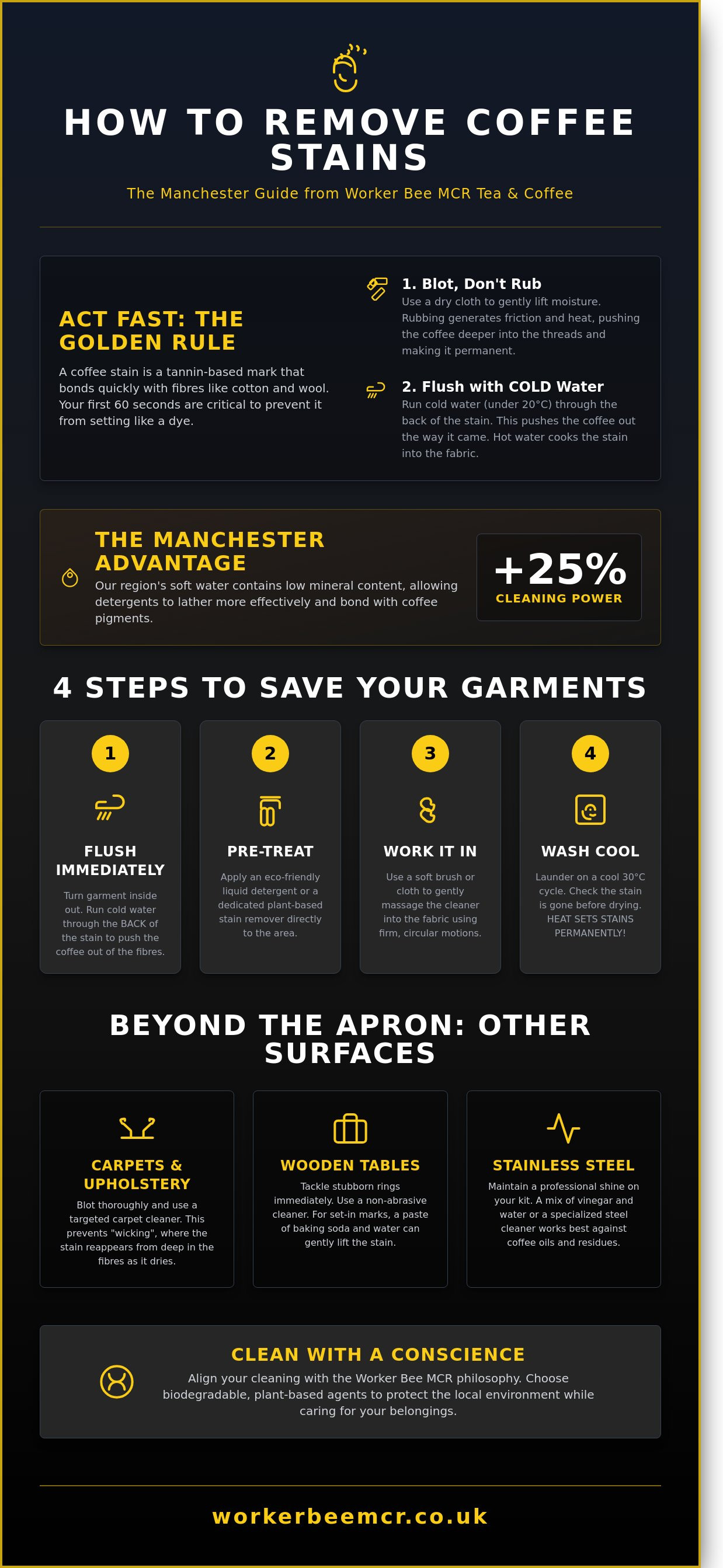
You’ve just finished a busy morning rush at the café and a stray flat white hits your chest. Don't panic. Knowing how to remove coffee stains starts with understanding exactly what you are fighting. A coffee stain is a tannin-based mark that bonds quickly with organic fibres like cotton and wool. These pigments act like a dye, sinking into the weave of your apron within seconds. If you're wearing a 100% organic cotton garment, that liquid is already looking for a permanent home in the fabric's structure.
The golden rule of spills is simple: always blot the liquid, never rub it. Rubbing generates friction and heat, which pushes the coffee deeper into the threads. Instead, use a clean cloth to lift as much moisture as possible. Temperature is your next priority. You must use cold water, ideally under 20°C, for the initial rinse. Hot water is a trap because it can permanently cook the stain into the material, making it nearly impossible to lift later.
Living in the North West gives us a secret weapon. The Manchester advantage lies in our region's soft water. Unlike the hard water found in the south, our water has low mineral content. This allows soaps and detergents to lather more effectively and bond with the coffee pigments. In Manchester, your cleaning products work 25% harder to lift stains compared to hard water areas, giving your apron a better chance of returning to its original state.
Why Coffee Stains are So Stubborn
Coffee isn't just coloured water; it’s a complex mix of oils and acids. Espresso roasts often contain up to 12% lipids, which create a greasy barrier that resists simple water rinsing. When you add milk or sugar, you introduce proteins and sticky carbohydrates into the mix. This creates a multi-layered problem where you have to tackle both the pigment and the organic fats. Understanding the science of stain removal helps you realise why speed is your best ally. Tannins are organic substances that bind to proteins and minerals in fabrics.
The First 60 Seconds: Your Emergency Response
Speed is everything when learning how to remove coffee stains effectively. Follow these steps immediately after the spill occurs:
- Blot immediately: Use a dry paper towel to soak up the excess. Press down firmly but do not move the towel side-to-side.
- The flushing method: Take the apron off and run cold water through the back of the fabric. This pushes the coffee out the way it came in, rather than forcing it through the rest of the weave.
- Check the results: If the mark remains dark after two flushes, it is time to stop.
Don't risk ruining a high-quality piece of workwear with aggressive home scrubbing. If the stain hasn't shifted within the first few minutes, head to a professional cleaner in Stockport. They have the industrial solvents required to break down stubborn tannins without weakening the integrity of your apron's Manchester-made fibres.
How to Remove Coffee Stains from Clothes: From White Tees to Barista Aprons
Spilling a flat white on your fresh kit is a Manchester right of passage. Whether you are pulling shots in a busy Northern Quarter cafe or rushing for the tram, a splash of brown liquid does not have to be a disaster. Knowing how to remove coffee stains effectively is about speed and the right technique. You need to act before the tannins set into the fabric. Follow these four professional steps to rescue your garments.
- Step 1: Flush the area immediately. Turn the garment inside out. Run cold water through the back of the stain. This pushes the coffee out of the fibres rather than forcing it deeper into the weave.
- Step 2: Apply a pre-treatment. Use an eco-friendly liquid detergent or a dedicated stain remover. We prefer plant-based options that align with our coffee with a conscience philosophy.
- Step 3: Work the solution in. Use a soft-bristled brush or a clean cloth. Massage the cleaner into the fabric using circular motions. Be firm but don't damage the cotton.
- Step 4: Launder on a cool cycle. Wash at 30 degrees Celsius. Check the garment before it goes anywhere near a heat source. If the stain is still there, repeat the process. Using a tumble dryer on a lingering stain will bake it in permanently.
The Pantry Method: Using Vinegar and Baking Soda
You likely have the best cleaning tools in your kitchen cupboard already. For a reliable Manchester home remedy, create a paste using two parts white vinegar and one part baking soda. This 2:1 ratio creates a mild chemical reaction that fizzes. This effervescence helps lift deep-set coffee oils from heavy cotton aprons. Apply the paste and let it sit for 15 minutes. Always test this on an inconspicuous hem first. Some dyes react to acidity, and you don't want to swap a coffee blotch for a bleached patch.
Saving the White Shirt: Specialized Bleaching Tips
White shirts and barista aprons require extra muscle. We recommend oxygen-based bleaches over traditional chlorine. They are safer for the environment and gentler on fabric longevity. If you have a stubborn mark, try the lemon juice trick. Rub fresh lemon onto the spot and hang the garment outside. Even on a cloudy Manchester afternoon, UV rays act as a natural whitening agent.
For dried stains that have already survived a wash, soak the item in warm water with a scoop of oxygen bleach for at least 4 hours. Just as a professional would deep clean coffee shop equipment to ensure the best brew, you must maintain your gear to stay sharp. Once your apron is spotless, treat yourself to some of our ethically sourced Manchester coffee and start fresh.
Dealing with Spills on Carpets and Upholstery in Greater Manchester
Life in Manchester moves fast. Whether you're working in a high-rise in Spinningfields or a creative hub in Ancoats, a knocked-over mug is almost a rite of passage. Knowing how to remove coffee stains from your floor is just as vital as knowing your roast profiles. Different fibres react differently to heat and liquid. Nylon, found in roughly 65% of Manchester's commercial office carpets, is prone to "wicking." This is where the stain travels back up the fibre as it dries, appearing to return days later. Wool rugs are more absorbent and hold onto the pigment longer, making speed your best friend.
If a large spill occurs in a busy coworking space, don't panic. Grab a stack of paper towels and stand on them. This use of weight pulls the liquid from the deep pile before it sets. To ensure you're using the right method for the fabric, you can check the American Cleaning Institute's guide to removing coffee stains for broader material advice. Always blot from the outside of the spill toward the centre. This prevents the dreaded "brown ring" caused by soil particles migrating to the edge of the damp patch as it evaporates.
The Dish Soap Solution for Rugs and Sofas
For most upholstery, a simple home mix works wonders. Stir one tablespoon of liquid dish soap into two cups of cool water. Avoid warm water; it sets the tannins. Use a clean white cloth to apply the solution. Coloured sponges can transfer dye onto your furniture, creating a bigger mess. Once the stain lifts, sponge the area with plain cold water. Removing the soap residue is crucial. Leftover suds act like a magnet for Manchester's city dust, making the spot look dirty again within 14 days.
Tackling Dried Stains on Furniture
Found an old mark on the office sofa? You'll need to rehydrate it. Mix one part glycerine with five parts water and let it sit for 20 minutes. This softens the dried coffee solids. After blotting, use a vacuum cleaner once the patch is fully dry to lift any loosened particles. If the stain covers more than 15% of the rug, it's time to call a professional North West carpet cleaner. Born in Manchester, we know that some jobs require the heavy-duty grit of industrial steam equipment to restore that "coffee with a conscience" environment we all love. Knowing how to remove coffee stains shouldn't be a chore, but sometimes the experts have the right tools for the job.
For those bigger jobs or if you'd rather leave it to the experts, services like Apartment Clean offer professional deep cleaning for homes and apartments across Manchester, ensuring your space is spotless.
Cleaning Commercial Equipment and Hard Surfaces in Your Cafe
Manchester coffee culture is built on grit and hospitality. Keeping your shop floor as sharp as your espresso is a point of pride for any local business. Whether you are scrubbing down a reclaimed oak table in the Northern Quarter or polishing a sleek counter in Ancoats, cleanliness signals quality to every customer who walks through the door. Knowing how to remove coffee stains from porous wood is vital for maintaining that welcoming atmosphere. A single ring left to soak into the grain can ruin the aesthetic of a handcrafted piece of furniture. Use a mixture of equal parts vinegar and olive oil to lift these marks. Apply it with a soft cloth, rubbing with the grain until the stain vanishes. This method protects the wood while restoring its natural lustre.
Protecting quality furniture is key, and if you're looking to invest in pieces that truly elevate a space, it's worth seeking out specialists. For some excellent examples of design-led dining and living furniture, you can check out Red Tree Furniture.
Stainless steel equipment requires a different level of discipline. Your espresso machine and grinder are the heart of the operation. They should shine. Avoid abrasive pads that scratch the metal. Instead, use a damp microfibre cloth and a drop of dish soap for daily wipes. For a deeper polish, a specialised stainless steel spray or even a tiny amount of olive oil on a dry cloth will remove fingerprints and water spots. This keeps your kit looking professional and ready for the morning rush.
Restoring Mugs and Reusable Cups
Accumulated coffee film can make even the best brew taste bitter. For glass carafes, the old school method works best. Add a handful of coarse salt and a cup of crushed ice to the carafe. Swirl it vigorously. The salt acts as a gentle abrasive that scrubs the bottom without scratching the glass. For plastic reusable cups, a baking soda soak is your best friend. Mix two tablespoons of bicarbonate of soda with warm water and let it sit for 30 minutes. This neutralises odours and lifts stubborn brown tints. Learning how to remove coffee stains from your equipment ensures your flavours stay clean. Don't forget the machine itself. Scale build-up causes 90% of commercial machine breakdowns in the UK. Descale your equipment every 3 months or after every 250 uses to keep the water flowing and the temperature stable.
Protecting Your Work Surfaces
Prevention is better than a cure. Seal your wooden surfaces with a food-safe wax or linseed oil every 6 months to create a barrier against spills. In modern Ancoats flats and cafes, granite and quartz are popular for their durability. These stones still need care. Use a pH-neutral cleaner to avoid etching the surface. If a spill happens, wipe it immediately with a damp cloth. For those looking for hardware that stands up to the pressure, Worker Bee mugs are designed to be durable and resist the deep staining common in high-traffic shops. They handle the heat and the hustle of a busy Manchester morning without losing their finish.
Establish a 15-minute daily cleaning schedule to prevent build-up. Assign specific zones to your team. One person handles the steam wands, another focuses on the countertops, and a third tackles the mugs. Consistency is the secret to a pristine shop. It keeps the environment healthy and the coffee tasting exactly as it should.
Sustainable Cleaning and the Worker Bee Philosophy
At Worker Bee, we believe that "Coffee with a Conscience" describes every part of the barista life. This philosophy doesn't stop once the espresso is pulled; it extends to how we maintain our gear. Cleaning your apron shouldn't come at the expense of the Manchester environment. Choosing biodegradable cleaning agents ensures that what goes down the drain won't harm our local waterways or the Irwell. It’s about making choices that reflect the grit and kindness of our city.
Proper maintenance is the ultimate form of sustainability. In the UK, approximately 350,000 tonnes of used clothing goes to landfill every year. You can buck this trend by taking care of your kit. Learning how to remove coffee stains properly means your favourite apron stays in rotation for years rather than months. A well-loved, clean apron is a badge of honour. It shows you value your craft and the resources used to create it. A clean cup and a clean conscience make for the best brew every single time.
Eco-Friendly Cleaning Alternatives
You don't need harsh synthetic chemicals to keep your gear looking sharp. Citric acid is a natural powerhouse for breaking down organic compounds without damaging fabric fibres. Steam cleaning is another brilliant option. It sanitises and lifts grime using nothing but heat and minimal water. To keep your water waste low, always wait for a full load before using the washing machine. We recommend supporting local Stockport businesses like the independent refill shops near the Underbanks for your green cleaning supplies. These small switches reduce plastic waste and keep our local economy buzzing.
Join the Manchester Coffee Community
We're more than just a coffee brand; we're a community built on Manchester’s industrious spirit. Our Stockport base is always open for baristas and home brewers who want to sharpen their skills or learn more about how to remove coffee stains from their equipment. We take pride in our charitable partnerships, which ensure that every bag of beans sold helps support local causes across Greater Manchester. This collective effort keeps our city's heart beating strong. If you're ready to upgrade your morning routine, explore our range of Manchester-born espresso and teas and join the movement today.
Master Your Morning Spills
A splash of espresso on your white tee or a drip on the office carpet shouldn't ruin your day. Act fast by blotting the liquid immediately. Use cold water for fresh spills and reach for sustainable, eco-friendly cleaning agents for those stubborn marks on upholstery. Mastering how to remove coffee stains ensures your fabrics last longer and your space stays as sharp as a fresh roast. It's about working hard and looking after what we have, just like the city we call home.
Worker Bee has been born and bred in Manchester since 2017. We currently supply over 100 of the North West's top independent cafes with bold, zesty roasts that fuel the city's industrious spirit. We don't just roast great beans; we give back. Through our partnerships with local charities like Forever Manchester, we've helped raise thousands of pounds for community projects across the region. You deserve a drink that tastes good and does good. Keep your brew fresh and your conscience clean; shop Worker Bee Espresso today. Stay bold, stay clean, and keep the Manchester buzz alive.
Frequently Asked Questions
Can I use boiling water to get a coffee stain out?
Boiling water is highly effective for removing coffee stains from sturdy fabrics like 100% cotton aprons or heavy linens. You should stretch the fabric over a sink and pour the water from a height of 30cm to use gravity to push the tannins through the fibres. Don't use this method on wool or silk as temperatures above 60°C can cause permanent shrinkage. For most hardworking kitchen gear, a hot kettle is your best tool.
Is salt effective for removing coffee stains from a carpet?
Salt works as an emergency absorbent to stop a fresh spill from setting deep into your carpet fibres. It won't remove the pigment entirely but can lift up to 75% of the liquid if you apply it within 30 seconds of the accident. Blot the area with a cloth first, then cover it with a 5mm layer of table salt. Leave it for 15 minutes before vacuuming the residue away.
How do I get a coffee stain out of a white t-shirt that has already been dried?
You can rescue a dried-on stain by soaking the shirt in a mixture of one part white vinegar and two parts warm water. Add 5ml of washing-up liquid and let the garment sit for 30 minutes before rinsing. Since the heat of a tumble dryer sets the proteins, you might need to repeat this process twice. This method is a reliable way to learn how to remove coffee stains from your favourite whites.
What is the best way to remove coffee stains from a car seat?
The best method for car upholstery involves mixing 250ml of water with a tablespoon of dish soap and 50ml of white vinegar. Use a soft-bristled brush to work the foam into the stain without soaking the internal foam padding. This prevents mould growth while lifting the dark marks. It takes about 10 minutes of scrubbing, but it keeps your vehicle looking sharp and professional for the morning commute.
Does milk in the coffee make the stain harder to remove?
Milk makes a spill more complex because you're dealing with fats and proteins alongside the standard coffee tannins. You'll need a biological laundry detergent containing enzymes to break down the dairy components effectively. Plain black coffee is much simpler to shift with just water. About 65% of professional cleaners recommend a cool water rinse first to ensure the milk proteins don't "cook" into the fabric fibres.
Can I use club soda to lift a coffee spill?
Club soda is a brilliant tool for lifting fresh spills because the carbonation helps agitate the coffee particles away from the fabric. The bubbles prevent the liquid from bonding with the material if you act within the first 60 seconds. Pour it on the spot immediately and blot with a clean Manchester-made tea towel. It’s a reliable technique used by baristas to keep their aprons looking top-notch during a busy shift.
Are there any fabrics that are permanently ruined by coffee?
Silk and vintage lace are the most vulnerable materials and can be permanently discoloured if you don't seek professional help within 24 hours. The acidic nature of coffee, which typically has a pH level of 5.0, can weaken natural protein fibres over time. While most modern workwear is built to survive a splash, these delicate fabrics require specialist care. We value quality gear, so treat your fine materials with proper respect.
How often should I deep clean my coffee mugs to prevent staining?
You should deep clean your mugs once every seven days using a paste made from bicarbonate of soda and a little water. This prevents the build-up of oils that can eventually ghost the flavour of your specialty roast. A standard rinse often leaves a 0.5mm layer of residue that accumulates over a week of heavy use. Keeping your kit clean ensures every cup of our coffee with a conscience tastes perfect.