

Cappuccino and Beyond: A Manchester Guide to the Perfect Frothy Brew
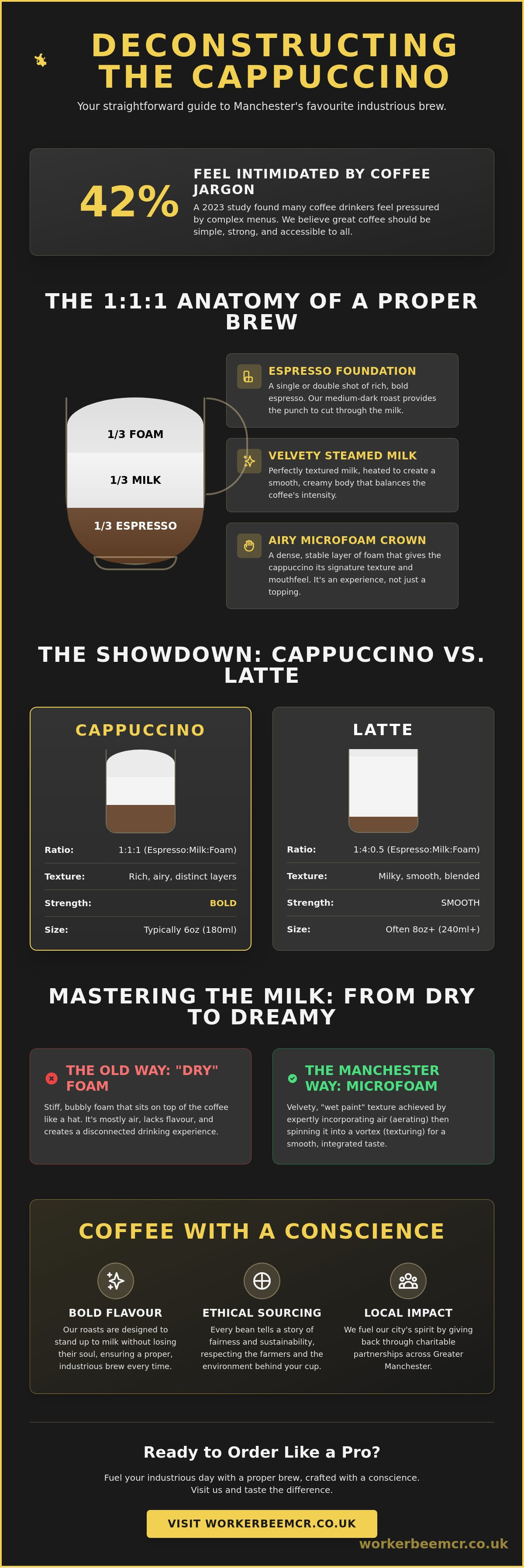
Most coffee menus in the Northern Quarter feel more like a complex chemistry exam than a simple morning pick-me-up. It's frustrating when you want a solid, industrious start to your day but end up with a cup of lukewarm air or a drink that lacks the punch you need. You aren't the only one feeling the pressure at the counter. A 2023 study by UK hospitality analysts found that 42% of coffee drinkers feel intimidated by specialty terminology. At Worker Bee, we believe great coffee should be accessible to every hard-working person in this city.
You deserve to know exactly what's landing on your table. We're here to help you master the subtle differences between a cappuccino and other espresso classics with this straightforward guide to Manchester’s favourite morning brew. Whether you're after a bold wake-up call or a smooth afternoon treat, you'll gain the confidence to order like a local pro. We'll settle the "dry" versus "wet" foam debate once and for all while showing you how to pull a proper Manchester-style shot. It's about more than just caffeine; it's about coffee with a conscience that fuels our community.
Key Takeaways
- Master the three-part harmony of espresso, milk, and microfoam to achieve the perfect balance in every Manchester-style brew.
- Discover why a high-quality espresso base is essential for a cappuccino and how our bold roasts create the ideal foundation for frothy milk.
- Learn to distinguish between a cappuccino and a latte by understanding the crucial differences in milk-to-coffee ratios and mouthfeel.
- Pick up professional pouring techniques used by local baristas to improve consistency while minimising milk waste in a busy cafe environment.
- Understand the impact of "coffee with a conscience" and how choosing ethically sourced beans supports charitable partnerships across Greater Manchester.
The Great Manchester Coffee Debate: Cappuccino and its Rivals
Manchester doesn't do things by halves. We like our coffee like we like our city: bold, authentic, and full of character. A classic cappuccino is a three-part harmony. It's a precise balance of rich espresso, velvety steamed milk, and a crown of dense foam. While the name traces back to the 16th-century Capuchin friars and the colour of their robes, today's Manchester cafe scene is less about ancient history and more about the morning rush. New coffee lovers often find themselves debating the merits of a cappuccino and its close relatives, like the latte or flat white, but the texture tells the real story.
The 1:1:1 Rule of a Classic Cappuccino
The secret to a proper brew is the ratio. A traditional cappuccino follows the 1:1:1 rule: one-third espresso, one-third steamed milk, and one-third airy foam. This creates a drink where the coffee's strength is softened by the milk but highlighted by the froth. A traditional 6oz (180ml) serving size ensures the espresso remains the star of the show. It's a far cry from the bucket-sized versions found in many UK high street chains, where the espresso often gets lost in half a litre of milk. We value the punch of a short, well-crafted drink over sheer volume. Quality beats quantity every time in our book.
Why Manchester Prefers an Industrious Brew
Our city was built on hard work. From the 19th-century textile mills to today's thriving Northern Quarter, Manchester runs on grit. We prefer a brew that's as industrious as we are. The Worker Bee isn't just a symbol on a building; it represents a community that works hard and looks out for its own. This is why we focus on "coffee with a conscience," ensuring every bean is sourced with respect for the farmers and the environment. We don't just roast coffee; we fuel a movement of kindness and civic pride.
Using locally roasted beans provides a fresh Manchester zing that mass-produced alternatives can't match. It's about more than just caffeine; it's about belonging. When you grab a cup, you're supporting a legacy of local pride and social responsibility. Our philosophy is simple:
- Bold Flavour: Roasts that stand up to milk without losing their soul.
- Ethical Sourcing: Every bean has a story of fairness and sustainability.
- Local Impact: Giving back to the city we call home through charitable partnerships.
This approach ensures that whether you're drinking a cappuccino and a pastry or just a quick shot on the way to the office, you're fueling the city's spirit. We believe every cup should be a proper brew with a purpose. It's the Manchester way. We're proud to be born in Manchester, serving the people who make this city buzz every single day.
The Anatomy of a Proper Cappuccino: Milk, Foam, and Espresso
A great cappuccino isn't an accident. It's the result of hard work, precision, and local expertise. In the busy cafes of Ancoats or the hidden gems of Stockport, the best baristas know that the relationship between the cappuccino and its individual components determines the final quality. It's a three-part harmony where every element must pull its weight. We don't settle for "good enough" in Manchester; we aim for a brew that represents our industrious spirit.
The Espresso Foundation
Everything starts with the shot. For a proper brew, we recommend a medium-dark roast like our Worker Bee Espresso. This profile provides the necessary "punch" to cut through the heavy milk foam. A lighter roast often gets lost, leaving you with a drink that tastes more like warm milk than coffee. Clarity of flavor is non-negotiable. This requires a pristine commercial setup. If you're looking to upgrade your shop's output, our Manchester commercial coffee machines guide breaks down the best local options for 2026. A clean machine ensures that the citrus and chocolate notes of the bean shine through without any bitter residue.
Texturing Milk for the North
The "microfoam" revolution changed the game for Manchester coffee lovers. We've moved far beyond the old-school "dry" foam that sat on top of the coffee like a stiff cloud. That style was mostly air and lacked flavor. Modern baristas strive for a "wet paint" texture. This is achieved by carefully balancing two stages:
- Aerating: Also called stretching, this happens in the first few seconds to add just enough air.
- Texturing: This involves spinning the milk in a vortex to break down large bubbles into tiny, microscopic ones.
Temperature is the final piece of the puzzle. We keep our milk between 60°C and 65°C. If you push past 70°C, the proteins break down and the milk tastes scorched. Staying in the sweet spot ensures the lactose creates a natural sweetness. This means you don't need a spoonful of sugar to enjoy the drink. While dairy is the traditional choice, Manchester’s speciality shops have mastered oat milk alternatives that mimic this creamy texture perfectly. It’s all about providing a quality experience for every member of our community. If you want to elevate your coffee game at home or in the office, you can explore our range of local roasts to find the perfect base for your next cappuccino and latte creation.
Cappuccino and Latte: Which One Suits Your Industrious Morning?
Manchester mornings are built on hard work. Whether you are catching a tram from Altrincham or setting up shop in the Northern Quarter, your first brew sets the pace. The choice between a cappuccino and a latte often comes down to how you want to experience your caffeine. Despite the common myth, both drinks usually contain the exact same double shot of espresso. You are getting a consistent dose of energy either way. The real difference is the architecture of the milk and the resulting mouthfeel.
It is all about the ratio. A latte is a "longer" drink, designed for those who want to sip and stay focused over a thirty minute period. A cappuccino is more concentrated. It offers a shorter, more intense interaction with the bean. Your decision depends on whether you need a comforting companion for a long spreadsheet or a quick, powerful spark to jumpstart a site visit. It is a matter of choosing the right tool for the job at hand.
The Latte Factor
The latte is the marathon runner of the coffee menu. It consists of a large volume of steamed milk with only a thin layer of microfoam on top. This creates a silky, liquid mouthfeel that is easy to drink. In Didsbury’s independent cafes, the latte is often a showcase for local craft, serving as a pristine canvas for detailed latte art. It is the perfect choice for those who find the natural bitterness of espresso a bit too sharp. If you prefer a layered approach at home, you can learn how to make the perfect latte macchiato to master your morning routine. It is about a smooth, consistent experience that lasts through your first few emails.
The Cappuccino Edge
If you want the coffee to take center stage, the cappuccino is your tactical advantage. It uses less total milk volume, which means the espresso flavor remains bold and punchy. The texture is the star here. You get a distinct contrast between the liquid coffee and a thick, creamy head of foam. We take pride in the classic British touch of a chocolate sprinkle, though purists might skip it. This drink is designed for efficiency. It is the industrious choice for a ten minute break. You get the warmth, the froth, and the cappuccino and espresso intensity you need to get back to the grind without feeling weighed down. It is a punchy, airy treat that respects your time.
Worker Bee coffee is born in Manchester, and we know our community values substance over style. Whether you choose the silky latte or the airy cappuccino, you are drinking coffee with a conscience. Every cup supports local heritage and the people who keep this city buzzing. We don't just roast coffee; we fuel the spirit of the North.
Mastering the Pour: Tips for Greater Manchester Baristas
Manchester doesn't do half-measures. Being a barista in this city means carrying the torch of our industrious past into every cup. It is about the "Worker Bee" standard of service. This isn't just about making drinks; it's about craft, community, and a bit of Northern grit. Every cappuccino and espresso-based beverage you serve should reflect that local pride. When the morning rush hits at 8:00 AM, your technique must be second nature.
Step-by-Step: The Perfect Manchester Pour
Consistency is the hallmark of a great local spot. Follow these steps to ensure every cup hits the mark. First, purge the steam wand to clear condensation. Position the tip just below the surface and aerate for 3 to 5 seconds. You want a gentle "paper-tearing" sound. Next, submerge the wand slightly to create a whirlpool. This vortex integrates the air into the milk for a silky, "wet paint" texture.
Before you pour, use the "tap and swirl" technique. Give the pitcher a firm tap on the counter to pop any large bubbles. Swirl the milk until it shines. To finish, pour slowly through the center of the crema. This keeps the iconic dark ring around the foam. It's the signature of a classic Manchester brew that looks as good as it tastes.
In a busy cafe, it is easy to overfill pitchers, but we believe in "coffee with a conscience." Minimising milk waste is vital for a sustainable business. Every 100ml of milk poured down the sink adds up to significant financial and environmental costs over a year. Measure your milk to the bottom of the pitcher spout every time. It saves money and respects the farmers who produce our dairy and oat alternatives.
Equipment and Maintenance in the North West
Manchester is famous for its soft water, often sourced from the Lake District. While this is great for tea, it can still cause mineral issues in commercial machines if left unchecked. Proper filtration is non-negotiable for machine longevity. Don't overlook the grinder either. A high-quality grinder is just as important as the espresso machine itself. If your grind size is inconsistent, the espresso won't have the strength to "hold" the foam, causing your cappuccino and latte art to collapse within seconds.
We take pride in helping local businesses thrive with the right tools. We supply commercial espresso machines and grinders that are built to handle the demands of a busy Northern high street. Keeping your gear clean and calibrated is the best way to show respect for the beans and the customers who rely on their daily caffeine fix.
Worker Bee Espresso: The Heart of Every Manchester Cappuccino
Worker Bee Espresso isn't just another blend. It is the engine behind Manchester's morning rush. We designed our signature roasts to be the perfect foundation for a cappuccino and other milk-based favourites. The profile is intentionally bold. It has enough body to cut through velvety microfoam while maintaining a smooth, chocolatey finish that lingers. Whether you are a barista in the Northern Quarter or a home enthusiast in Didsbury, our beans provide that reliable, punchy kick. For those who love the ritual but not the caffeine, our Swiss Water Decaf ensures a no-compromise cup. This chemical-free process keeps the flavour profile intact. It is the ideal choice for a late-night treat that won't disrupt your sleep.
Coffee with a Conscience
We believe great coffee should do great things for the people who drink it and the people who grow it. Our "coffee with a conscience" mission means we source ethically and give back to the city we call home. We partner with local organisations like Forever Manchester to ensure our success supports community projects. You can taste this commitment at many local coffee shops across the region. Each batch is roasted specifically for the industrious spirit of our people. We don't do fluff; we do honest, hard-working coffee for a city that never stops moving.
Beyond the Bean: Mugs and Merchandise
The perfect brew requires the right kit. Our Worker Bee mugs and reusable cups are built for the daily grind, keeping your drink at the right temperature while you are on the move. When you pair a classic cappuccino and one of our iconic bee-branded mugs, you are showing your pride for the 0161. If you fancy a change from the bean, our specialty tea range offers a different kind of proper brew. From robust breakfast blends to refreshing herbal infusions, we've got every preference covered. Check out our Tea in Manchester guide to find your next favourite steep.
We are proud to be born in Manchester. This city's heritage of hard work and community inspires everything we roast. Whether you need a single bag for your kitchen or a wholesale partner for your cafe, we are here to help. We supply businesses across the North West with fresh roasts, reliable equipment, and genuine local support. Let's make every cup count. Contact us today to bring the taste of Worker Bee to your home or business.
Fuel the City’s Industrious Spirit
Manchester runs on hard work and even better coffee. You’ve now mastered the precise balance of velvety micro-foam and bold espresso that makes our local cafe culture stand out. You understand why the choice between a cappuccino and a latte defines the rhythm of an industrious morning. It’s about more than just a drink; it’s about the craft that keeps our city moving. Every pour is a chance to showcase the grit and quality that defines the North West’s thriving coffee scene.
Worker Bee is Manchester-born and bred. We’re proud to supply the North West’s finest independent cafes with professional kit and beans that mean business. We believe in coffee with a conscience, which is why we’ve committed to supporting local charities through our sales since we started. This isn’t just about caffeine; it’s about ensuring your success feeds back into the community we all call home. Don’t settle for average when you can serve a brew that carries the weight of Manchester’s heritage in every cup.
Upgrade your cafe with Worker Bee Espresso and Commercial Machines to start pouring with purpose today. Let’s keep this city buzzing together.
Frequently Asked Questions
Is a cappuccino and a latte the same thing?
No, a cappuccino and a latte are distinct drinks defined by their specific milk ratios and textures. A classic cappuccino uses equal parts espresso, steamed milk, and airy foam for a bold, punchy flavour profile. Lattes are much milkier, often using a 1:3 or 1:4 ratio of coffee to milk. In Manchester's best coffee shops, we serve cappuccinos in smaller 6oz cups to ensure the coffee remains the star of the show.
How much caffeine is in a standard Manchester cappuccino?
A standard Manchester cappuccino typically contains 126mg of caffeine when made with a double shot of espresso. Most local independent shops use 18 grams of coffee to pull a 36g yield for their base. This gives you the energy to tackle a shift or a long walk through the Northern Quarter. It's a reliable kick that fuels our city's industrious spirit every single day with no unnecessary fluff.
Can I make a great cappuccino with a French Press?
You can absolutely make a great cappuccino with a French Press by using the plunger to aerate warm milk. Pump the mesh filter up and down 15 times to create thick, velvety foam at home. While it's not a commercial steam wand, it delivers a solid result for your morning brew. We believe quality coffee should be accessible to everyone, whether you're using a professional machine or a simple £15 cafetiere.
What is the best milk for a frothy cappuccino?
Whole milk is the best choice for a frothy brew because its 3.5% fat content supports a stable bubble structure. The proteins and fats work together to create that silky microfoam we love in a proper local cafe. If you prefer plant-based options, 70% of Manchester baristas recommend oat milk for its creamy texture. It mirrors the richness of dairy while supporting a more sustainable, ethical way to enjoy your coffee.
Why does my cappuccino foam disappear so quickly?
Your foam likely disappears because the milk was overheated past 70 degrees Celsius, which breaks down the vital protein bonds. Freshness also matters, as milk nearing its expiry date won't hold air effectively for more than 60 seconds. At Worker Bee, we teach that 65 degrees is the sweet spot for sweetness and stability. Keeping your kit clean and your milk cold ensures your cappuccino and its frothy head stay perfect.
What is a "dry" cappuccino vs a "wet" cappuccino?
A dry cappuccino contains more foam and less steamed milk, while a wet version is creamier with more liquid milk. Ordering a dry brew gives you a more intense coffee flavour because there's less milk to dilute the espresso shots. It's a no-nonsense choice for those who want that bold, Manchester-born grit in their cup. A wet cappuccino sits closer to a flat white, offering a smoother, more mellow experience for your afternoon break.
Does a cappuccino always have chocolate on top in the UK?
A traditional UK cappuccino almost always comes with a dusting of chocolate powder, but it's not a mandatory requirement. This tradition dates back to 1982 when high street chains standardised the recipe for British consumers. Many speciality shops now skip the chocolate to let the complex notes of the cappuccino and its specific roast shine through. Just ask your barista if you want to keep it simple or go for that nostalgic cocoa finish.